Wave pool overview
A wave pool is an artificial body of water equipped with machinery to generate rhythmic water movement, simulating the feel of ocean waves. In a theme park context, wave pools typically occupy a large flat basin at one end of an aquatics zone, with the wave-generating mechanism at the deep end and a gradual slope leading to a shallow wading area at the opposite end.
The attraction differs from ride-based water features in that guests are largely stationary — floating on inflatables or standing in shallow water — rather than travelling along a fixed route. This passive nature makes the wave pool suitable for guests of varying ages and physical abilities, giving it a broad demographic appeal within a park's aquatics offering.
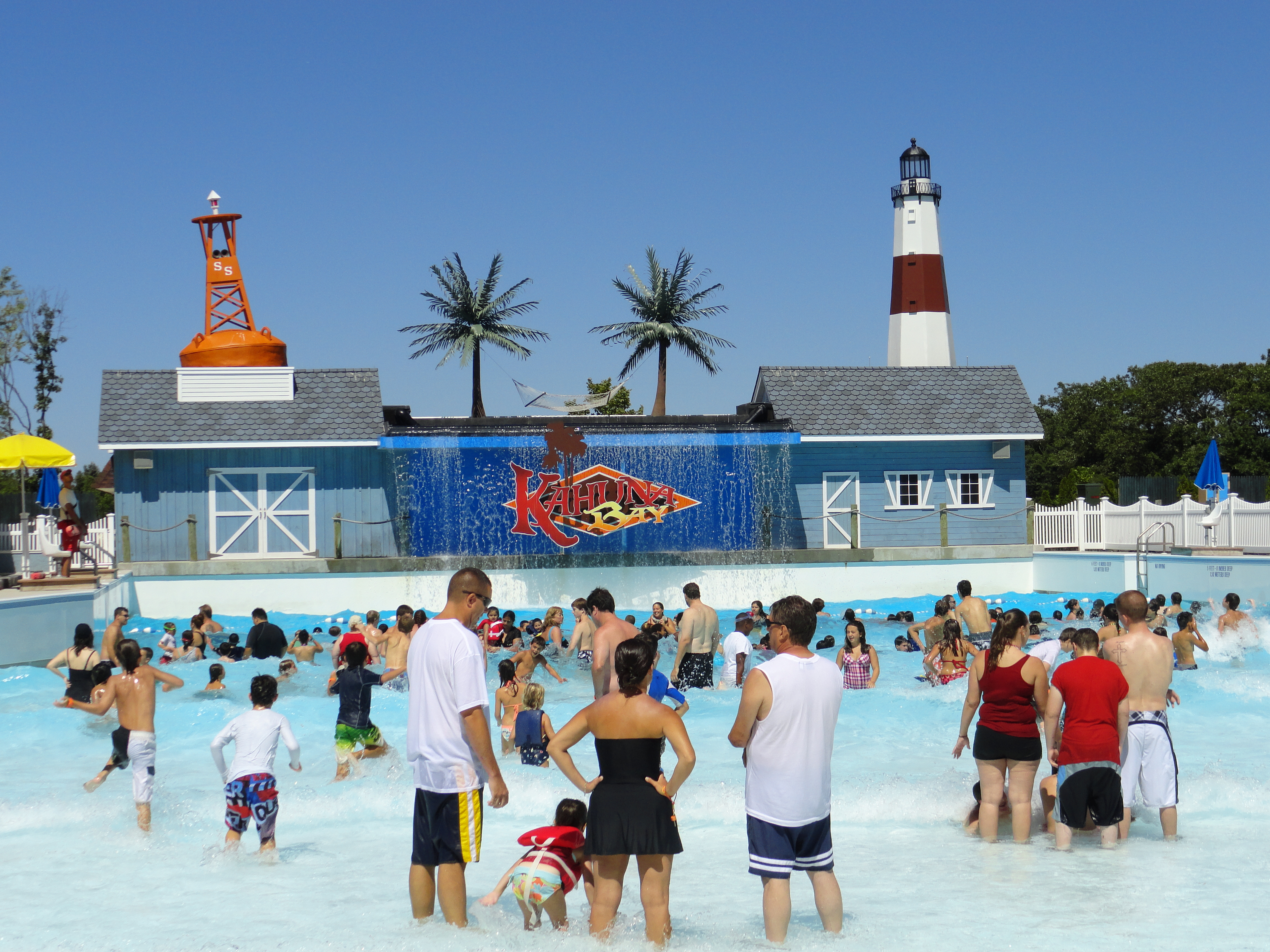
Wave pool in an amusement park aquatics zone. Source: Wikimedia Commons (CC BY-SA 3.0).
Articles published on this website summarise publicly available information, industry research and educational materials.
The anchor role in aquatics sections
When a wave pool is present within a theme park's aquatics section, it typically functions as the central draw that organises the layout of surrounding attractions. Slides, lazy rivers, and splash pads are often arranged around the perimeter of the wave pool or accessed via walkways that pass alongside it, giving guests a continuous view of the pool as they navigate between other water features.
This spatial arrangement means the wave pool serves as a natural meeting point and orientation landmark within the aquatics area. Seating, shaded structures, and food service points are concentrated in the zones adjacent to the pool, capitalising on its high dwell time — guests spending extended periods in or near the water rather than cycling quickly through a queued ride.
Capacity and crowd management
Wave pools carry significantly higher simultaneous-guest capacities than ride-format water attractions. Where a log flume might accommodate a limited number of guests per cycle, a wave pool can serve several hundred guests at once. This capacity characteristic makes the wave pool an important pressure-release element within a busy aquatics section, absorbing a substantial portion of daily visitors without creating the queue lengths associated with slide and flume attractions.
Parks manage wave pool access through lifeguard placement and periodic rest periods during which the wave cycle stops and guests are encouraged to clear the water for rotation. These rest intervals also allow for safety checks and the redistribution of guest density across the pool area.
Wave generation systems
Several technical approaches exist for generating waves in a pool environment. Pneumatic systems use chambers of air to push and pull water in controlled pulses. Surge systems use mechanical pistons or paddles at the deep end of the basin. The choice of system affects the wave profile — pneumatic systems tend to produce longer, rolling waves, while surge systems can create shorter, more intense crests.
The rhythm and height of waves are programmed within defined parameters, both for the guest experience and for safety. Most European park wave pools operate wave cycles that alternate between active and rest periods, and the maximum wave height is set relative to the pool's overall depth to prevent hazardous conditions near the shallow end.
Integration into the broader park layout
Where a theme park includes both dry-ride zones and an aquatics section, the wave pool tends to sit at the boundary between the two, or within a clearly defined wet-zone enclosure. This enclosure typically includes changing facilities, locker access, and distinct entry points to manage the flow of guests who are transitioning from dry rides to water activities.
In European parks that are not exclusively water parks, the aquatics section including the wave pool often operates on a seasonal schedule determined by ambient temperatures. This seasonal dynamic affects staffing, maintenance windows, and the positioning of the wave pool within the park's overall narrative — it may be framed as a summer-specific feature rather than a year-round core attraction.

